
Blog
Explore our shorter articles, reviews and translations.

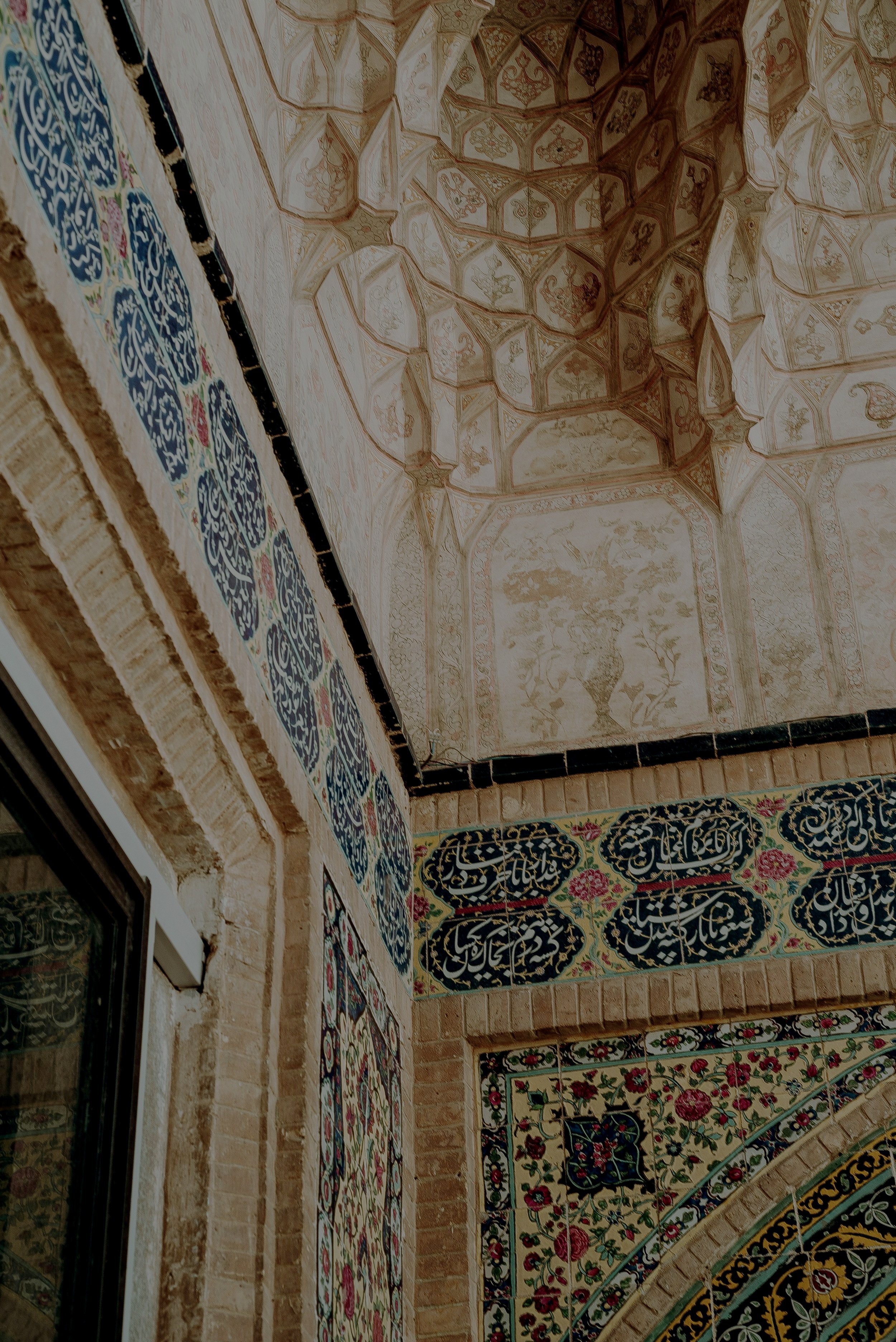
Departure, Trial and Rebirth: Suzanne Stetkevych’s Analysis of Labīd’s Muʿallaqah
By Ustadh Hamza Baig | The qaṣīdah (ode) has served as the most dominant form of Arabic poetry across centuries of Arabic literary history. At a surface level, the typical qaṣīdah appears to be a polythematic poem covering various scenes of bedouin campsites, desert fauna, and tribal society with little unifying the different sections… In The Mute Immortals Speak, Suzanne Stetkevych presents an argument for the coherence and unity of the qaṣīdah by studying it through the lens of ritual theory.
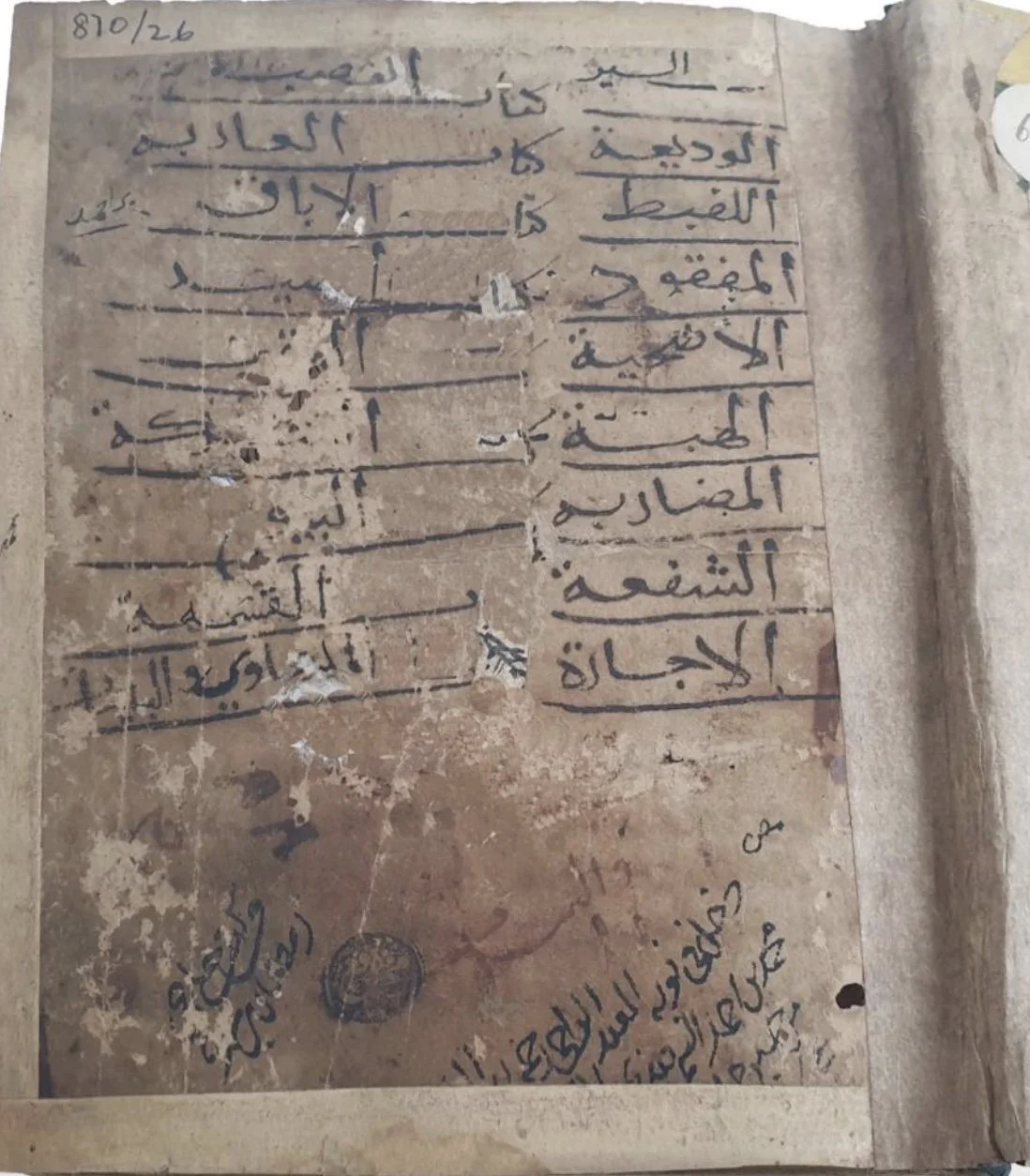
Studies in Ḥanafī Legal Texts (I): Transmission and Authority in the Formative Period
By Dr. Salman Younas | The intellectual origins of the Ḥanafī school are rooted in the teachings of Abū Ḥanīfa (d. 150/767), whose legal opinions were preserved, transmitted, and elaborated by his leading disciples, most notably Abū Yūsuf and Muḥammad. The latter in specific played a decisive role in shaping the school’s textual legacy by recording its doctrines in several texts, including those that would later be identified collectively as the corpus of ẓāhir al-riwāya.
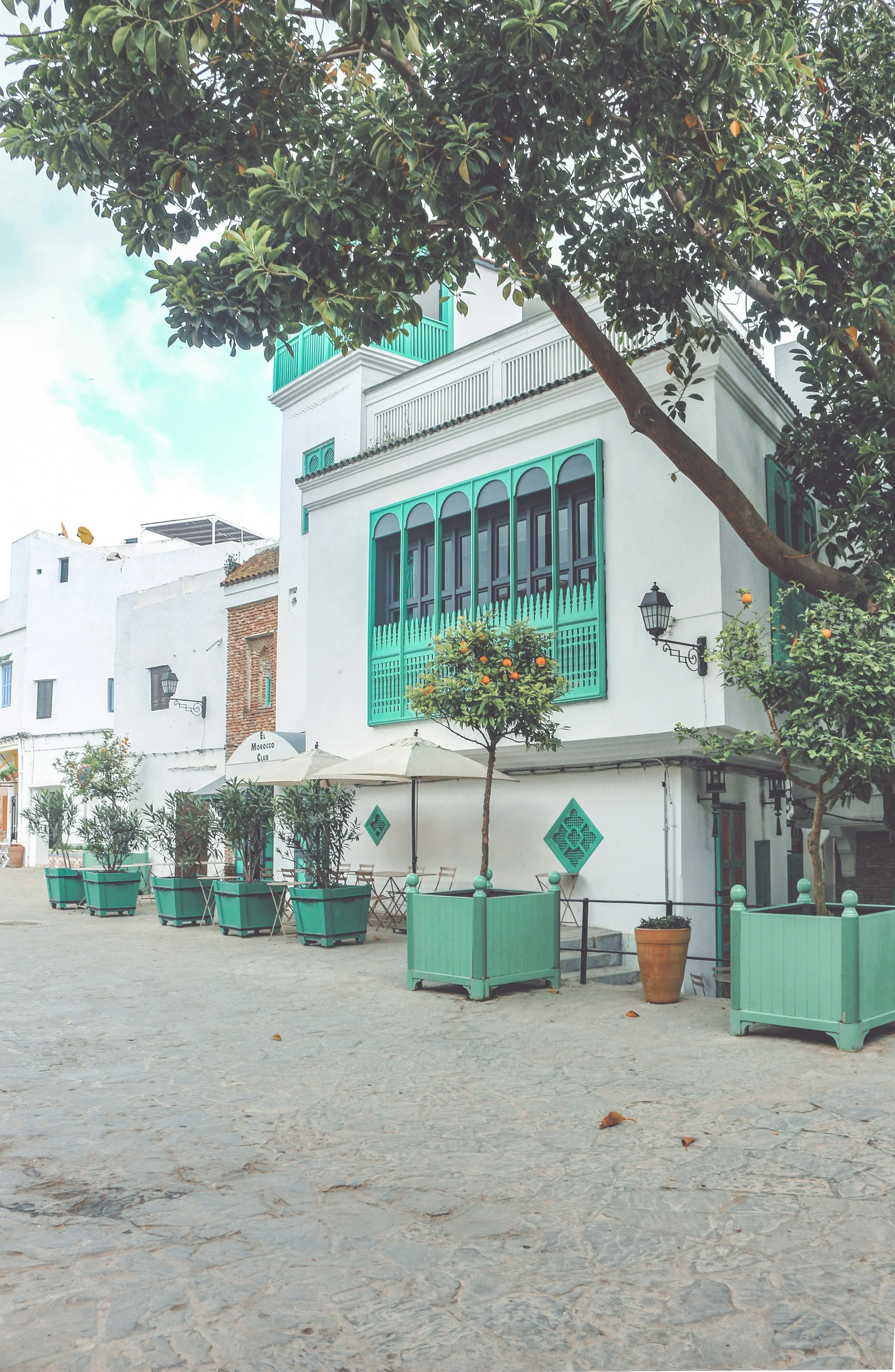
Morocco: Pages of a Living Tradition | Pt. V
By Mufti Hussain Kamani | By 89 AH/709 CE, Mūsā b. Nuṣayr had fully conquered Tangier, appointing his trusted general Ṭāriq ibn Ziyād over it. From this very port, Ṭāriq would launch the crossing that changed the history of al-Andalus forever.
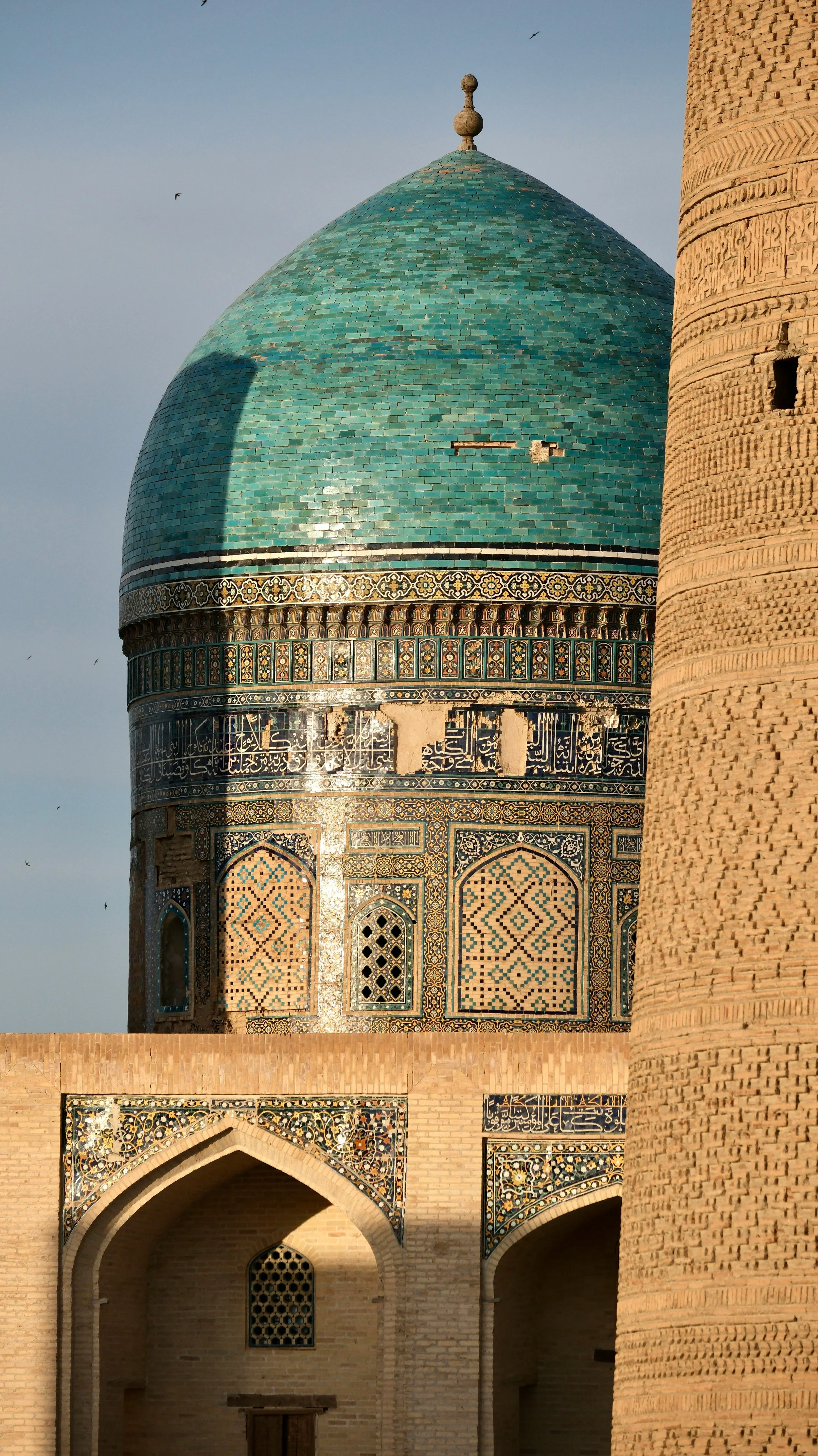
A Timeline of Imām al-Bukhārī’s Life
By Mufti Muntasir Zaman | Few early Islamic scholars have had their lives as extensively documented as Imām al-Bukhārī, both through eyewitness accounts and secondary biographical compilations. Recent scholarship has attempted to visualize al-Bukhārī’s extensive travels through cartographic representations
Morocco: Pages of a Living Tradition | Pt. IV
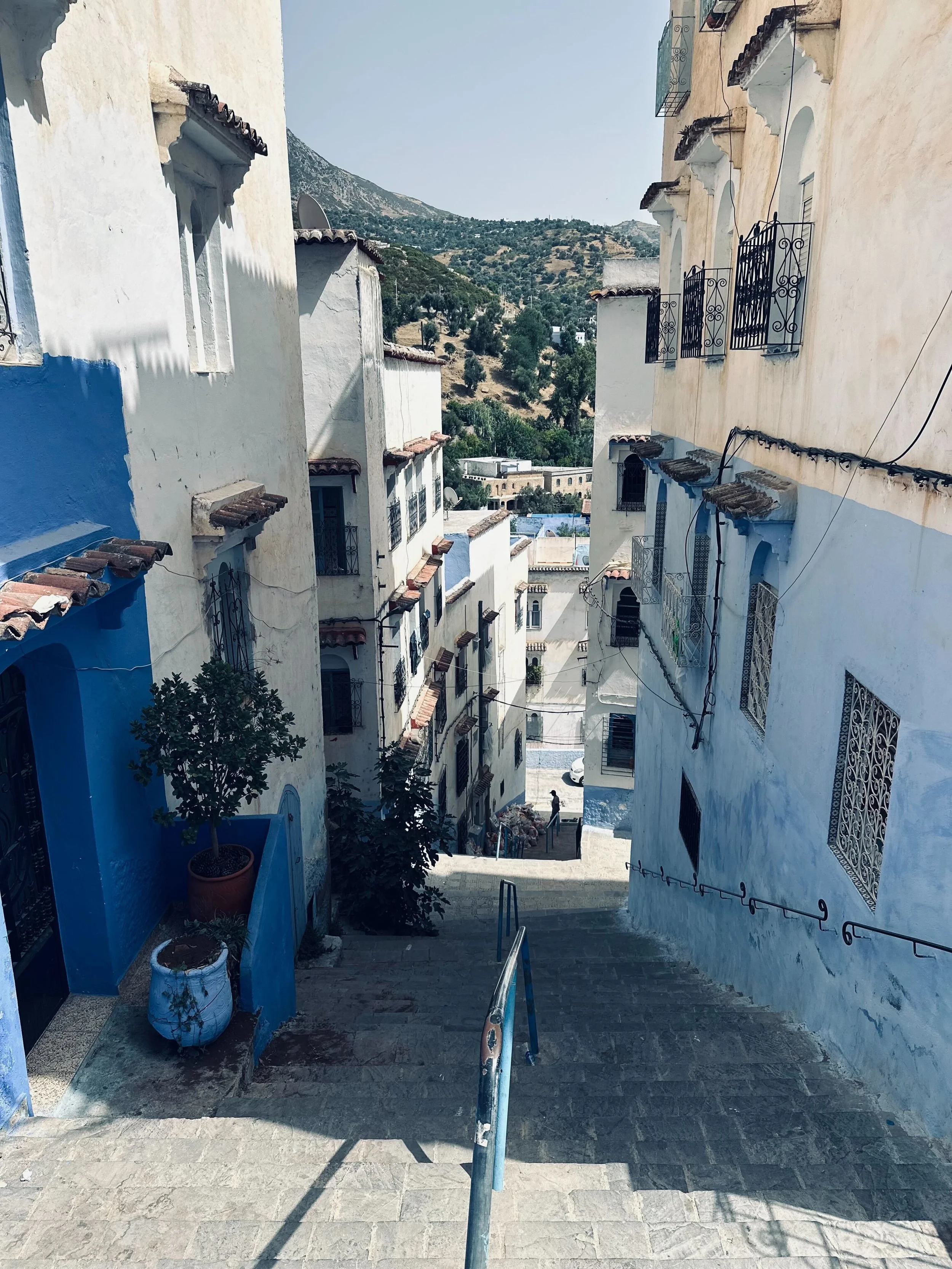
By Mufti Hussain Kamani | Chefchaouen’s reputation, in my mind, had been shaped mostly by social media: photo after photo of blue alleyways, travel influencers urging people to visit. Unlike Fes or Marrakesh, I hadn’t come across many classical references to this city in scholarly works. It seemed more like a place known for its visuals than its significance. But as the journey unfolded, my perspective began to shift.
A Research-Based FAQ for Students of Arabic
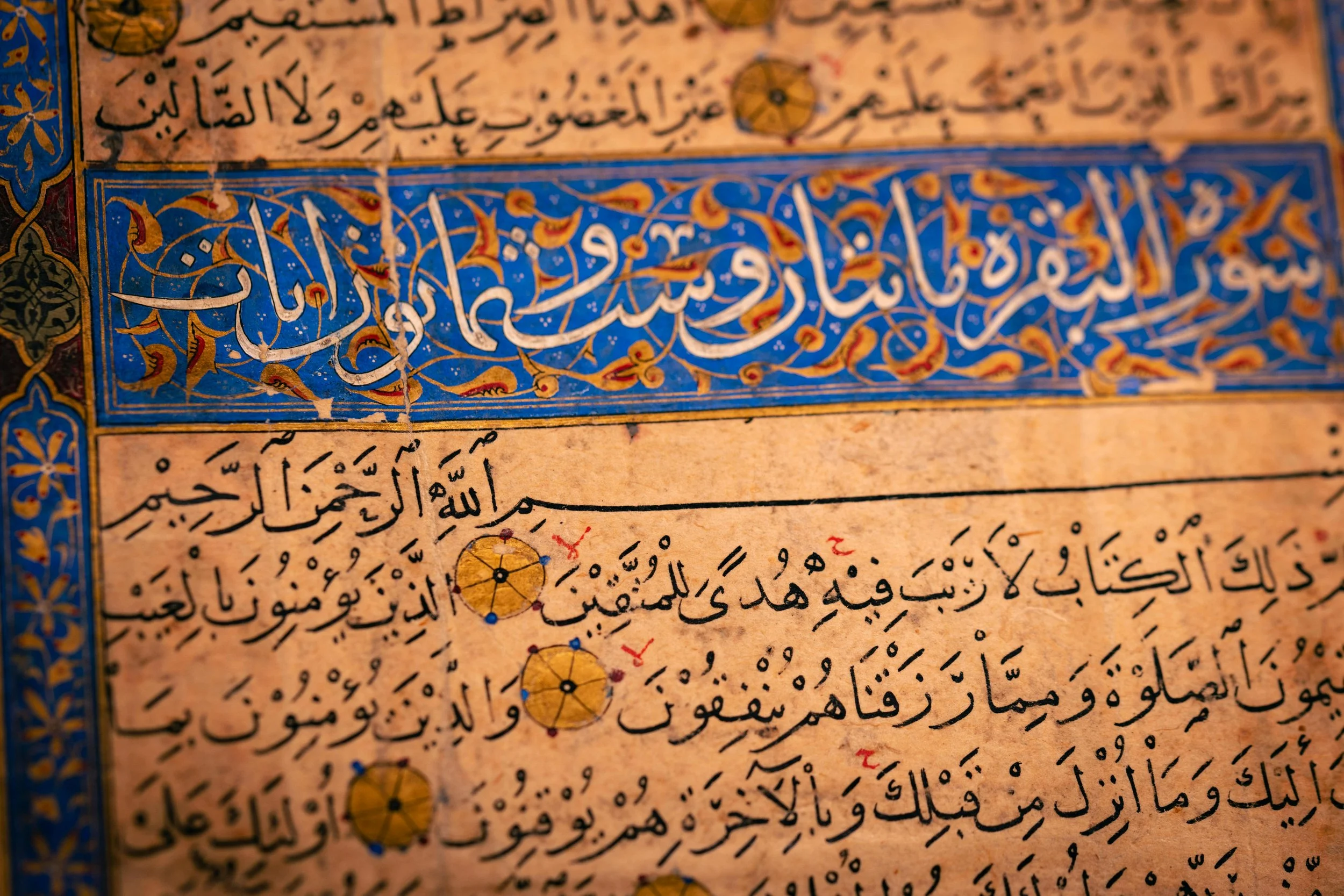
By Ustadh Syed Omair | The following article aims to catalog and address some of the most common questions posited by ṭullāb al-ʿilm, and particularly those related to the acquisition of the Arabic language, which is the main subject of study for the first year of the five-year Qalam Seminary program.
Introduction to Ṣaḥīḥ al-Bukhārī | Pt. I
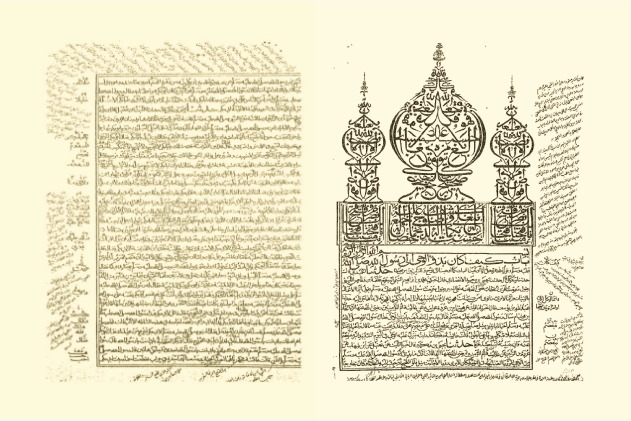
By Ustadha Sarah Salih | This article is the first in a series translating al-Sahāranpūrī’s introduction to his edition of Ṣaḥīḥ al-Bukhārī. The objective of this translation series is to share the author’s insights with students of knowledge and help them gain a better appreciation of one of the greatest texts they will study with Allah’s permission.
Morocco: Pages of a Living Tradition | Pt. III
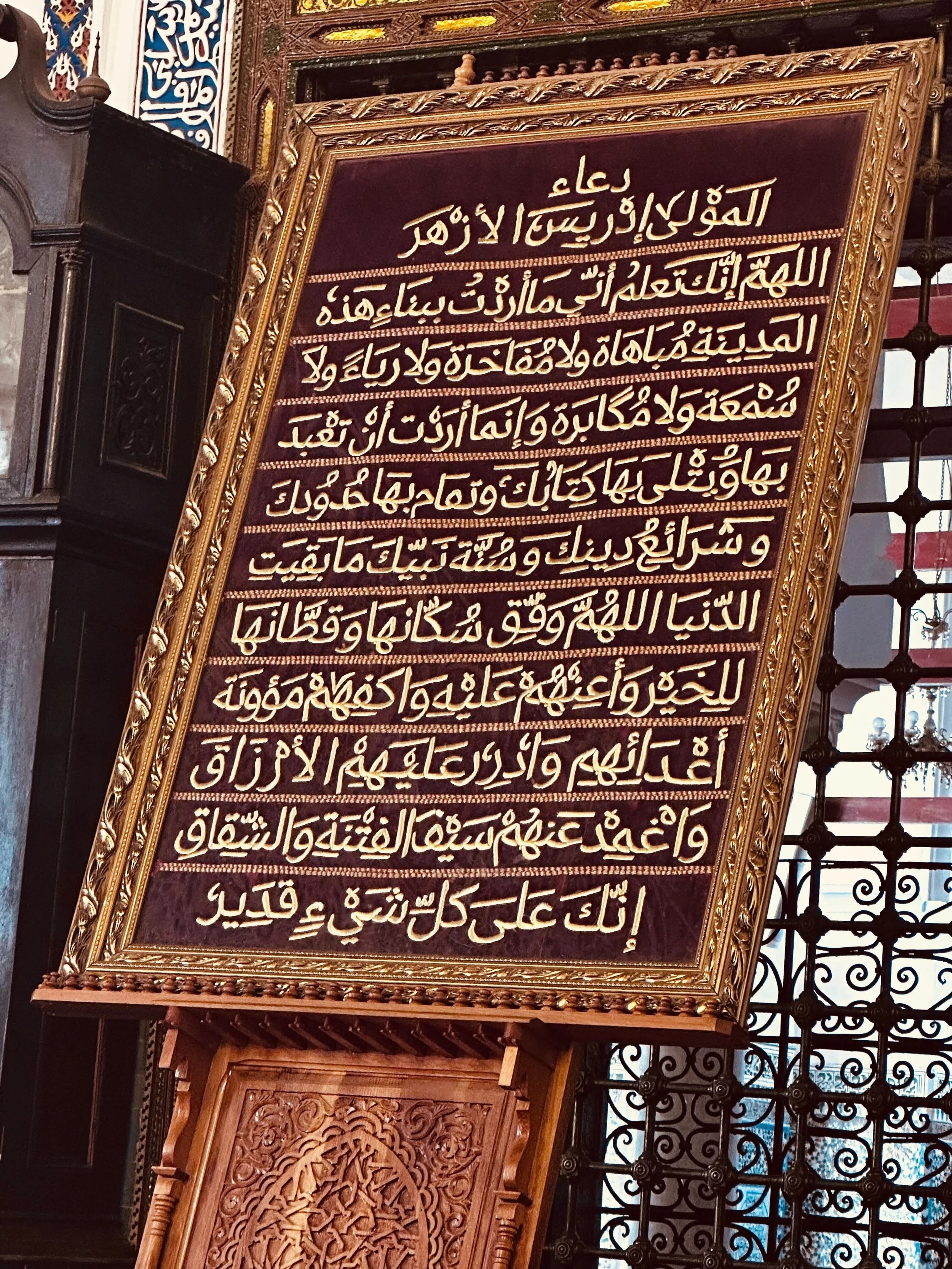
By Mufti Hussain Kamani | From the moment I entered this city I felt its weight, not just in the architecture or historical sites, but in the unseen spiritual presence that courses through it. This is a city long associated with sanctity. I had yearned to visit for years due to its frequent mention in classical Islamic texts and the number of scholars who either hailed from here or were drawn to it.
Morocco: Pages of a Living Tradition | Pt. II
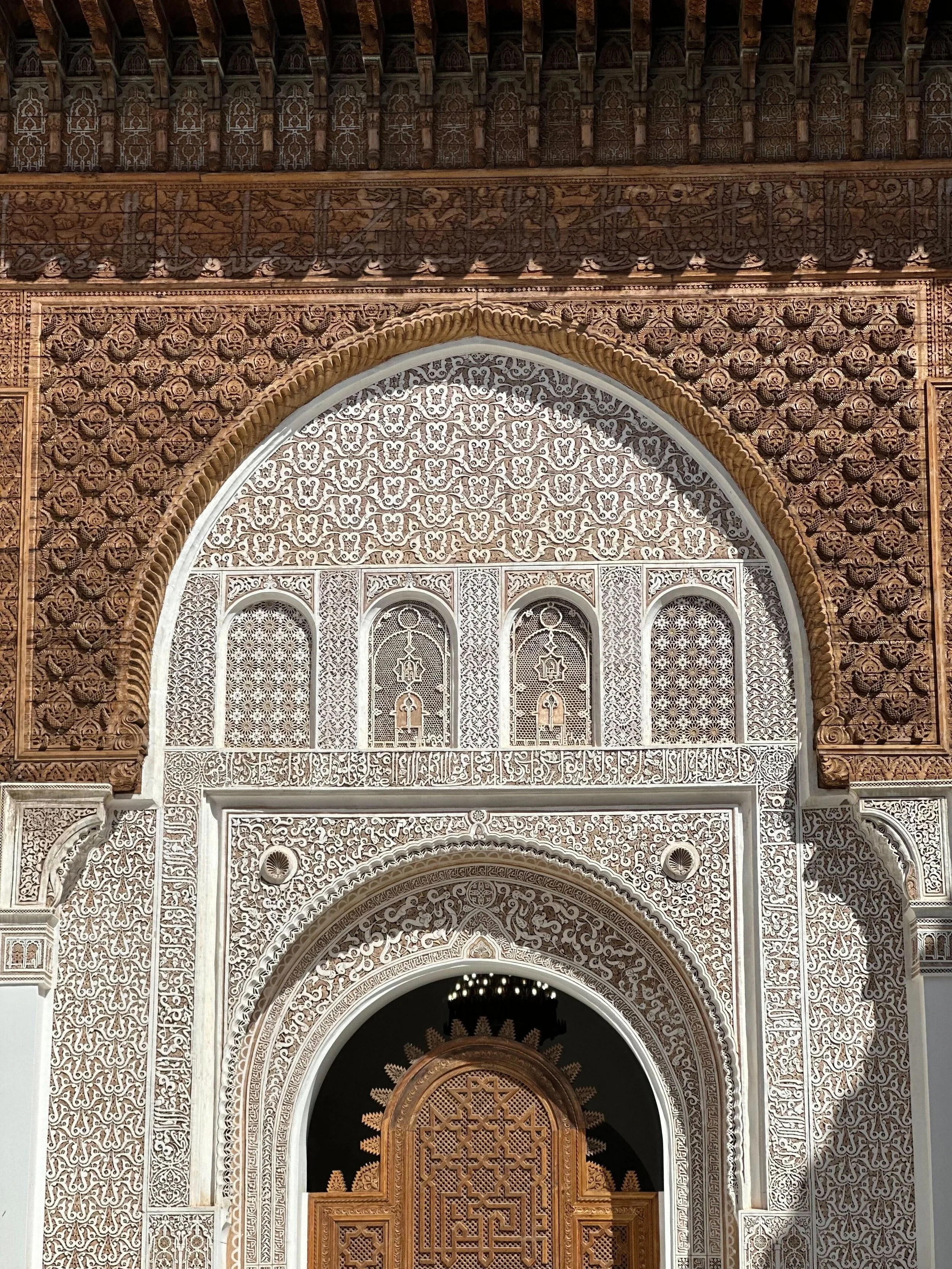
By Mufti Hussain Kamani | Now, Madrasah Ibn Yūsuf serves as little more than an artifact or art installation. But it used to be more than just a beautiful building. It once bustled with intellectual life. Every Friday, its courtyard hosted a manuscript market known as Dalālat al-Kutub (دلالة الكتب). Collectors, scholars, and students would gather to buy and sell rare texts.

Morocco: Pages of a Living Tradition | Pt. I
By Mufti Hussain Kamani | This was my first time ever setting foot in Morocco. For years, I had studied its scholars, admired its legal minds, read the words of its spiritual masters, and imagined its landscapes. In class, I would often ask students from Morocco to tell us about the food, culture, and history. By the faḍl of Allah, that hope was realized in the summer of 1447 AH/2025 CE, on the annual Morocco Hadith Tour organized by Qalam.

Between Confidence and Competence: Arabic Through the Dunning-Kruger Lens
By Ustadh Obaidullah Ahmad | Over the past fifteen years of teaching Arabic, I have noticed some key psychographics among students that ultimately impact their long-term learning of the language. One is the contrast between students just beginning and those further along the path. Beginners often soar with confidence. However, students who’ve spent months building real skills begin to notice just how vast, layered, and demanding the language really is.

On Studying Classical Arabic: Learning a Dormant Language
By Ustadh Syed Omair | One must understand the Arabic that was spoken in the time of the Quran to truly appreciate it, as modern and colloquial Arabic no longer suffice to grasp the Quran in its full brilliance. In this ongoing series, we will elucidate some of the pitfalls that students face when studying the Arabic language and offer some insights, suggestions, and solutions to make the journey easier, in shāʾ Allah.

'Night of Power'? Translating Laylah al-Qadr
By Ustadh Syed Omair | While English is certainly not the first alien language that this terminology has encountered, it is one of the most widely spoken languages in recent history. This has given rise to a set of peculiar English words that are so commonly used by Muslims that perhaps they have never been given a second glance, such as “ablution” for wuḍūʿ, “circumambulation” for ṭawāf, or “Lord” for rabb. While some of these terms may be faithful to the lexical meaning of the word, some of these words deserve to be revisited to align the meaning closer to the understanding of Muslims of the past.

The Development of Tajwīd as a Science
By Basil Farooq | The codification of the principles of recitation is intimately linked with the codification of the rules of the Arabic language in the early generations. Then it became an independent science with specialized books, taking on a new name—the science of tajwīd. The following is a survey of the development of the science of tajwīd and the history of authorship in it.

The Qahwa Chronicles
By Mufti Muntasir Zaman | Coffee left an indelible mark on premodern Muslim societies, impacting their daily lives, gatherings, and even their poetry. In this post, we delve into a series of captivating moments in history, aptly named The Qahwah Chronicles.

The Sahāranpūrī Print of the Qurʾan
By Mufti Muntasir Zaman | Mawlānā Aḥmad ʿAlī Sahāranpūrī’s (d. 1880) editorial and commentarial work on Ṣaḥīḥ al-Bukhārī has undoubtedly cemented his legacy in the annals of hadith scholarship. There is, however, another accomplishment of his that has drawn little attention: his impressive lithographic print of the Qurʾan. To be sure, Sahāranpūrī was not the first, let alone the only, scholar intent on printing the Qurʾan by utilizing the recently available print technology. The Qurʾan was first printed in his home country India in 1802, and subsequently, multiple editorial projects were carried out throughout the nineteenth century. What distinguished Sahāranpūrī’s project was his attention to the accurate orthography of the Qurʾan and the cadre of experts who reviewed his work.

A Biographical Sketch of Professor Muhammad Zubayr Siddiqi
By Mufti Muntasir Zaman | Prior to their boom in recent decades, works of English hadith literature could be counted on one hand. Many of the authors of these works passed away within the decade, such as Zafar Ishaq Ansari (d. 2016),[1] Muṣṭafā al-Aʿẓamī (d. 2017), and Fuat Sezgin (d. 2018). One of the earliest and most accessible and informative primers of hadith studies in English is Hadith Literature: Its Origin, Development & Special Features by Professor Muhammad Zubayr Siddiqi published in 1961.[2] By Siddiqi’s own admission, when authoring his introduction to hadith, he knew of only one other introductory study in English: the British Orientalist Alfred Guillaume’s (d. 1965) The Traditions of Islam, but that too was from a Western critical perspective.[3]