
Morocco: Pages of a Living Tradition | Pt. V
Mufti Hussain Kamani
This is part V of a travelogue series. Click to read part I, part II, part III, and part IV.
Part V: Tangier
The final stop on our journey brought us to Tangier (طنجة), where the Atlantic Ocean meets the Mediterranean. A gateway between Africa and Europe, Tangier has for centuries been a port for merchants, armies, and those seeking refuge.
Some classical historians even connect Tangier to the story of Mūsā (AS) and al-Khiḍr. Imam al-Ṭabarī writes in his tafsīr:
عن محمدِ ابنِ كعبٍ في قولِه: ﴿لَا أَبْرَحُ حَتَّى أَبْلُغَ مَجْمَعَ الْبَحْرَيْنِ﴾. قال: طَنْجَةُ.[1]
Muḥammad b. Kaʿb narrates regarding Allah’s statement, “I will not give up until I reach the junction of the two seas”: “It is Tangier.”
Yāqūt al-Ḥamawī describes it with measured precision:
طَنْجَةُ… بلد على ساحل بحر المغرب مقابل الجزيرة الخضراء… وهي خصبة، وبين طنجة وسبتة مسيرة يوم واحد… وهي آخر حدود إفريقية.[2]
Tangier… a land upon the coast of the western sea, facing al-Jazīrah al-Khaḍrāʾ (Algeciras)… fertile, one day’s journey from Ceuta [..] It is the last frontier of Ifriqiya.
Lisān al-Dīn b. al-Khaṭīb, always poetic in his observations, wrote of Tangier:
المدينة العادية، والبقعة التي ليست بالخبيثة ولا بالردية… سورها ليس بمثلوم، وساكنها غير ملوم، وفضلها معلوم.[3]
A noble city, a land neither vile nor base… its walls unbroken, its people beyond reproach, its virtue well-known.
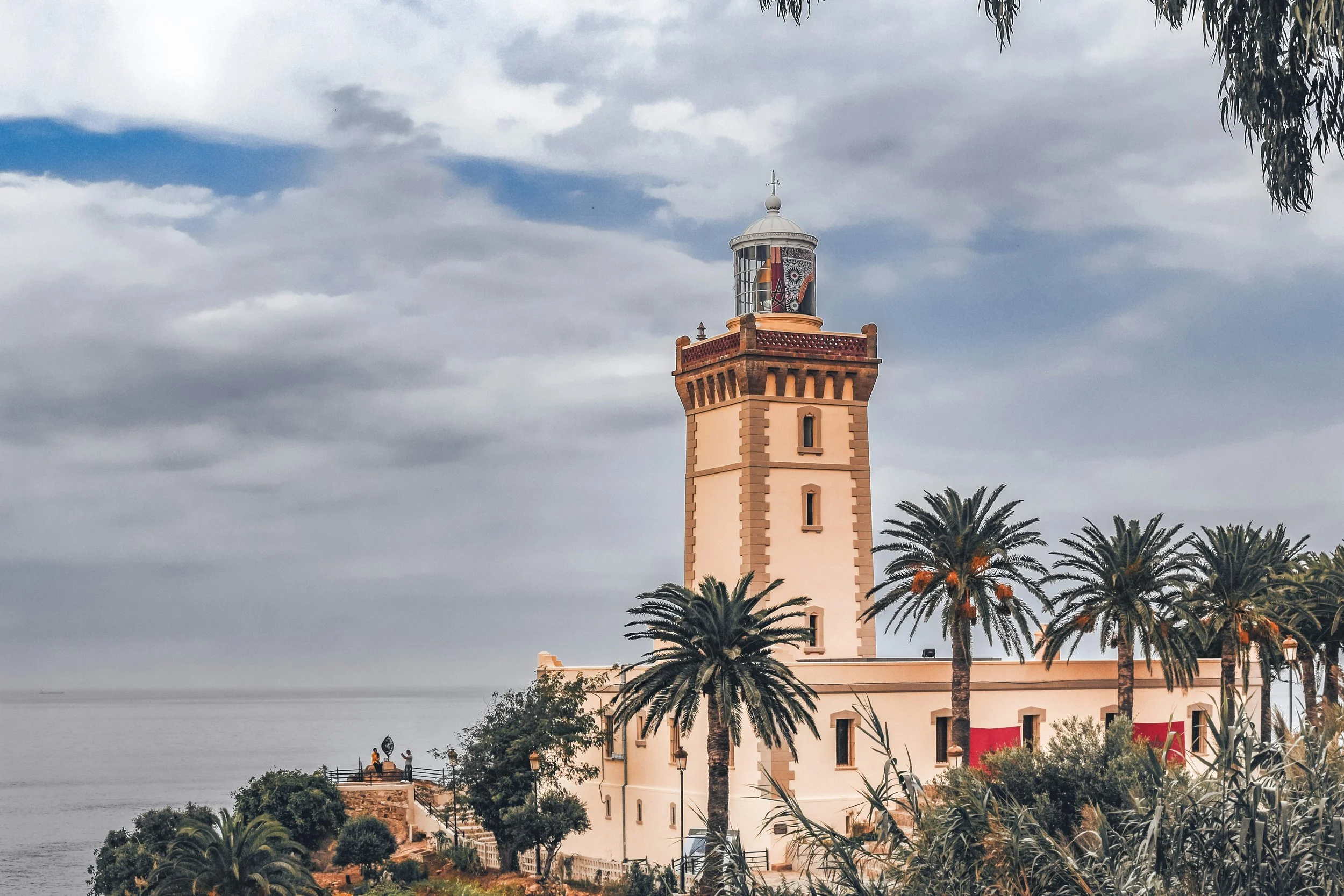
The Phoenicians and Carthaginians built early settlements in this area, followed by the Romans, whose ruins can still be found around Tangier. In 62 AH/682 CE, ʿUqbah ibn Nāfiʿ reached these lands and made significant military headway. It is narrated that he made the following dua as he overlooked the Mediterranean:
يَا رَبِّ لَوْلَا هَذَا الْبَحْرُ لَمَضَيْتُ فِي الْبِلَادِ مُجَاهِدًا فِي سَبِيلِكَ.[4]
My Lord, were it not for this ocean, I would have journeyed forth as a mujāhid in your path.
By 89 AH/709 CE, Mūsā b. Nuṣayr had fully conquered Tangier, appointing his trusted general Ṭāriq ibn Ziyād over it. From this very port, Ṭāriq would launch the crossing that changed the history of al-Andalus forever.
Over the centuries, Tangier would be claimed by multiple vying powers — the Portuguese, Spanish, and English — before returning to Moroccan sovereignty. In the 20th century, it lived an unusual chapter as an international zone: a political experiment where diplomats, spies, merchants, and exiles mixed, until Morocco’s independence in 1956 restored it to the nation.
Tangier holds a pivotal place in Islamic history. It was here that Ṭāriq b. Ziyād’s army gathered in 711 CE before crossing over the straits to what became known as Jabal Ṭāriq, or Gibraltar. This moment opened the door to an era of profound knowledge exchange and institution-building in al-Andalus and beyond. Many of the ʿulamāʾ from al-Andalus likely passed through its ports on their way to enter the Maghreb, and vice versa. The ferry ride today from Tangier to Spain only takes around an hour.
Standing here, where continents and oceans meet, we were reminded of Islam’s remarkable ability to transcend geographic and ethnic boundaries. The Muslim world has long been a global village, even before Muslims had access to modern transportation capabilities, with scholars traveling thousands of miles to seek and transmit the dīn.
Visiting Scholars
Our day began in the heart of Tangier’s kasbah, where we walked through the alleys before making our way to the resting place of Shaykh ʿAbdullāh al-Ghumārī, may Allah have mercy on him. He is buried in al-Zāwiyah al-Ṣiddīqiyyah, not far from the tomb of Ibn Baṭṭūṭah. His grave lies beside that of his father, a respected Sufi scholar who was himself a pillar of learning in the region.
Born in Tangier in 1910, al-Ghumārī memorized the Quran at a young age along with classical works such as Bulūgh al-Marām, Alfiyyah Ibn Mālik, and and al-Ājurrūmiyyah. His began studying under his father before pursuing higher learning in Fes at al-Qarawiyyīn. He later transferred to al-Azhar in Cairo, where he graduated in 1931. He specialized in hadith and was known for his remarkable memory, able to recall more than ten thousand narrations with their full asānīd and detailed knowledge of their narrators.
His career included teaching at al-Azhar and delivering lessons on Ṣaḥīḥ al-Bukhārī and Ṣaḥīḥ Muslim in Egyptian mosques. Upon returning to Tangier, he became the khaṭīb of al-Zāwiyah al-Ṣiddīqiyyah and continued teaching the ʿulūm. He produced more than a hundred works, and his legacy was acknowledged by leading scholars such as Shaykh ʿAbd al-Fattāḥ Abū Ghuddah and Shaykh Muḥammad ʿAwwāmah.
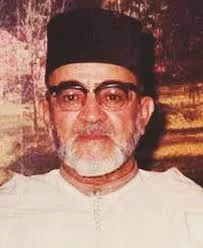
Shaykh ʿAbd-Allāh al-Ghumārī, may Allah have mercy on him.
Al-Ghumārī’s life was not without hardship. He spent nearly a decade in prison due to accusations of affiliation with the Muslim Brotherhood, partly because of his acquaintance with Ḥasan al-Bannā and his father. His influence reached far beyond Morocco; even Muhammad Ali, the famed boxer, was touched by his personality and knowledge. Passing away in 1993, he was laid to rest in Tangier beside his father, leaving behind a scholarly legacy akin to that of the Kattānī family in Fes.
From there, we walked a short distance to the tomb of Ibn Baṭṭūṭah. Our visit to Tangier would be incomplete without honoring its most famous son, the renowned jurist, traveler, and historian whose journeys spanned nearly three decades across the Muslim world and beyond. Born in Tangier in 1304 CE (703 AH), he embarked on his first journey to Makkah at the age of twenty-one, initiating a life of exploration that took him across both Muslim and non-Muslim lands.[5] His travels lasted approximately 29 years, covering some 75,000 miles. Al-Ṭālib al-Bartallī, the author of Fatḥ al-Shakūr fī Maʿrifat Aʿyan ʿUlamāʾ al-Takrūr, describes his journey:
حج في رحلته ثلاث مرات، وجال في بلاد التكرور والمغرب ومصر والشام والعراق وأرض الترك، وجال في الحجاز وبلاد اليمن وبلاد السند والهند والصين، وطاف في البلاد شرقا وغربا وجوفا وجنوبا، وزار قبور كثير من الأنبياء والأولياء، ولقي الأولياء والصالحين وزارهم تبركاً بهم، وشاهد العجائب والغرائب.[6]
During his journeys, he performed Hajj three times and traveled through the lands of Takrur, the Maghrib, Egypt, the Levant, Iraq, and Turkestan; he journeyed in the Hijaz, Yemen, Sindh, India, and China; he toured lands east, west, north, and south; he visited many graves of prophets and saints; he met and sought blessings from the righteous; and he witnessed many marvels and wonders.
A particularly remarkable episode is the dream he experienced while sleeping on the roof of a Sufi zawiyah, which foreshadowed his travels and divine support:
ورأى ليلة وهو نائم بسطح زاوية الشيخ في سمت القبلة، ثم تيامن عنها ثم شرق ثم يذهب من ناحية الجو ثم يبعد الطيران في ناحية المشرق وينزل في أرض مظلمة خضراء ويتركه بها. قال فعجبت من هذه الرؤيا وقلت في نفسي: إن كان كاشفني الشيخ برؤياي فهو كما يحكى عنه. قال فلما غدوت لصلاة الصبح قدمني الشيخ إماماً ثم صلى سبحة الضحى ودعاني وكاشفني الشيخ برؤياي، فقصصتها عليه، فقال سوف تحج وتزور النبي ﷺ وتجول في بلاد اليمن والعراق وأرض الترك وبلاد الهند وتبقى بها مدة طويلة، وستلقي بها أخي دلشاد الهنديّ ويخلصك من شدة تقع فيها، ثم زودني دراهم وودعته وانصرفت. ومنذ فارقته لم ألق في أسفاري إلا خيراً وظهرت عليّ بركاته.[7]
One night, while he was asleep on the rooftop of the shaykh’s zāwiyah, he dreamt that he was facing the qiblah. Then he turned to the right, then eastward, and then he was carried off through the air, flying far toward the east, until he descended and was left in a dark, green land.
[Ibn Baṭṭūṭah] said: “I was astonished by this and thought to myself: ‘If the shaykh can interpret my dream, then he is truly as people say.’ The next morning when I went for fajr, the shaykh put me forward to lead. He then prayed ḍuḥā, called me to him, and explained to me the meaning of my dream. After I related it to him, he said:
‘You will perform hajj, visit the Prophet ﷺ, and travel through Yemen, Iraq, the lands of the Turks, and the lands of Hind. You will remain there for a long time, and there you will meet my brother, Dalshād al-Hindī, who will deliver you from a hardship that will befall you.’
He then provided me with some dirhams, I bade him farewell, and I departed. Since I parted from him, I have encountered nothing but good in my travels, and his blessings have continued to appear to me.”
After decades of wandering, Ibn Baṭṭūṭah returned to Morocco around 756 AH/1353 CE. Upon his return, he resided at the court of the Marinid Sultan Abū ʿInān Fāris, who commissioned Ibn Juzayy al-Kalbī to compile Ibn Baṭṭūṭah’s travel accounts into a single manuscript, which he titled Tuḥfat al-Nuẓẓār fī Gharā’ib al-Amṣār wa ‘Ajā’ib al-Asfār (The Gift to the Observers Concerning the Wonders of Cities and Marvels of Travels). It came to be known simply as Riḥlat Ibn Baṭṭūṭah (The Journey of Ibn Baṭṭūṭah). Ibn Juzayy’s role was crucial in shaping the narrative into the famous Riḥlah, rendering it into a literary form suitable for dissemination across the Islamic world.[8] This monumental travelogue has been translated into multiple languages, influencing scholars, geographers, and explorers for centuries.
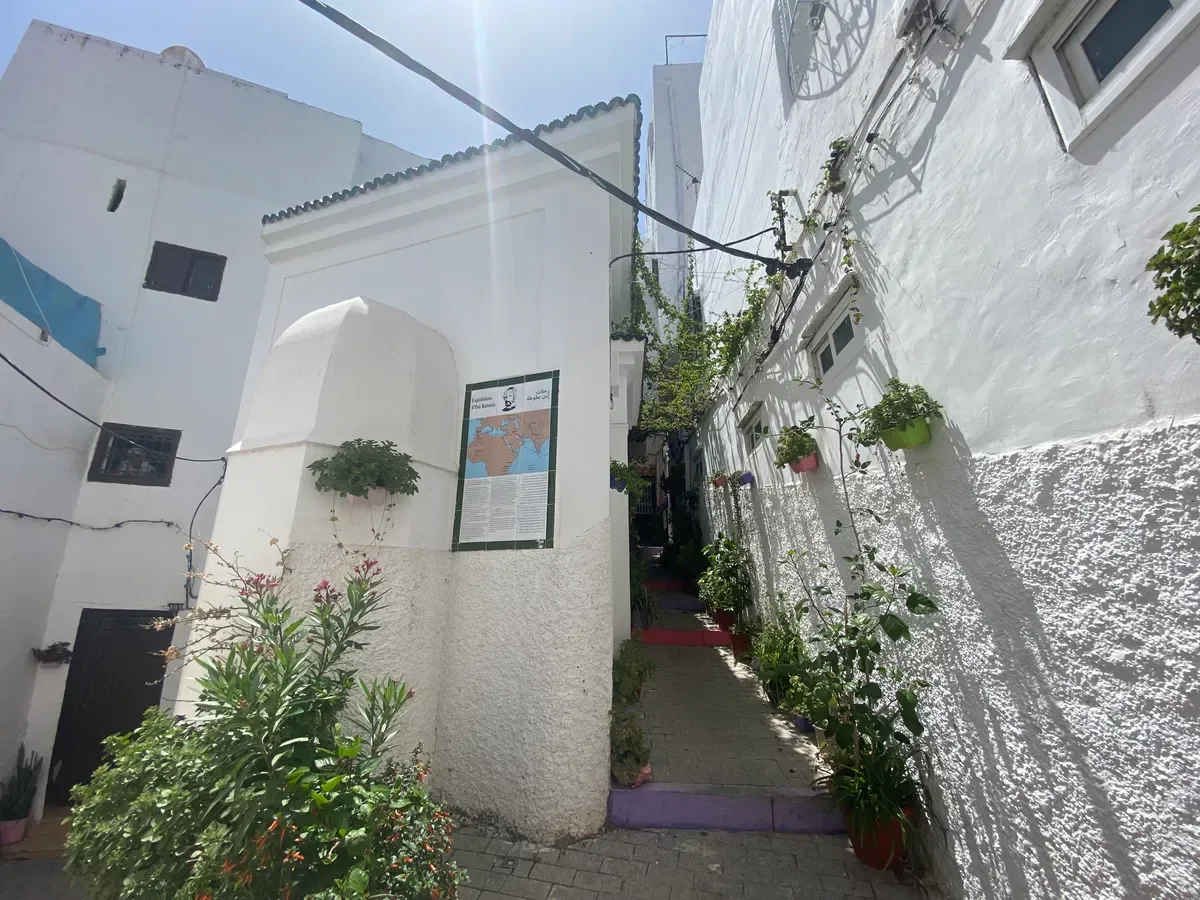
Ibn Baṭṭūṭah’s grave
Closing the Journey
Before midday, we made our way to the Grand Mosque of Tangier for jumuʿah. The imām delivered a moving khuṭbah on the honor and dignity Islam grants women, a reminder of the timeless moral principles revealed in the Quran and embodied by Rasūl-Allāh ﷺ.
That evening, we gathered one last time for a closing session with the Qalam Hadith Tour group, reflecting on the memories forged over the journey. Around 10:30 PM, we left Tangier for the Casablanca Airport — a four-hour drive along Morocco’s Atlantic coastline — for our return flight to the USA.
This trip had been more than a history tour. It was a blessed journey across a land steeped in scholarship and spirituality: from the labyrinthine kasbahs to the dramatic coastlines, from the warmth of its people and their unmatched hospitality to the vibrant markets and meticulous craftsmanship.
Along the way, we crossed the vast desert, drove through the majestic Atlas Mountains, and spent time with the resilient Berbers who call those mountains home. We felt the scorching heat of Fes and Marrakesh, then enjoyed the cool breezes of Casablanca, Rabat, and Tangier. With every region came a distinct tapestry of people — the Arabs, the Amazigh, and the Tuareg — each proud of their own traditions and connected by a shared faith.
We witnessed the cultural imprints left behind by centuries of European occupation, hearing locals effortlessly weave between languages: in some regions, the unmistakable influence of French in everyday speech; in others, a hint of Spanish, a legacy of the northern coast’s past.
The rich history of taṣawwuf, fiqh, and hadith studies is visible throughout the country. The sacrifices and legacy of the scholars who once walked these streets are still present, though they have long passed. We came seeking the history of hadith scholarship, but departed with something far greater: a deeper connection to the living legacy of Islam.
Notes
[1] Ibn Jarīr al-Ṭabarī, Jāmiʿ al-bayān ʿan taʾwīl āy al-qurʾān (Cairo: Dār Hijr, 2001), 15:309.
[2] Yāqūt al-Ḥamawī, Muʿjam al-buldān (Beirut: Dār Ṣādir, 1995)< 4:43.
[3] Lisān al-Dīn b. al-Khaṭīb, Miʿyār al-ikhtiyār fī dhikr al-maʿāhid wal-diyār (Cairo: Maktabah al-Thaqāfah al-Dīniyyah, 2002), 147.
[4] Ibn al-Athīr, al-Kāmil fī al-tārīkh (Beirut: Dār al-Kitāb al-ʿArabī, 1997), 3:206.
[5] Al-Ṭālib al-Bartallī, Fatḥ al-shakūr fī maʿrifat aʿyān ʿulamāʾ al-takrūr (Beirut: Dār al-Gharb al-Islāmi, 1981), 105.
[6] Al-Bartallī, Fatḥ al-shakūr, 106.
[7] Al-Bartallī, Fatḥ al-shakūr, 106.
[8] Khayr al-Dīn al-Ziriklī, al-Aʿlām (Dār al-ʿIlm lil-Malāyīn, 2002), 6:236.
Mufti Hussain Kamani is the Director of the Qalam Seminary and a senior faculty member, where he teaches hadith, fiqh, and tazkiyah. With over two decades of experience in teaching and community leadership, he has mentored and trained over a thousand students, many of whom now serve as imams, chaplains, educators, and leaders across the United States.
